Wow. I'm stunned. No, actually I'm not. Head on over to Conservapedia. "A conservative encyclopedia you can trust." Read: the conservative answer to Wikipedia.
Entries are to follow strict " Conservapedia Commandments." I've starred the entries I found interesting:
"1. Everything you post must be true and verifiable.
2. Always cite and give credit to your sources, even if in the public domain.
*3. Edits/new pages must be family-friendly, clean, concise, and without gossip or foul language.
*4. When referencing dates based on the approximate birth of Jesus, give appropriate credit for the basis of the date (B.C. or A.D.). "BCE" and "CE" are unacceptable substitutes because they deny the historical basis. See CE.
*5. As much as is possible, American spelling of words must be used.[1] (the footnote clarifies: "You will only be blocked for violating command 5 if you repeatedly change words from American spelling to another spelling.")
6. Do not post personal opinion on an encyclopedia entry. Opinions can be posted on Talk:pages or on debate or discussion pages."
The site gives an exhaustive list of examples of "bias" in Wikipedia. Among the complaints: "Wikipedia's entry on abortion reads like a brochure for the abortion industry."
The articles are ridiculous. There are highlights of Bill and Hillary Clinton's failures and Nixon's triumphs, and JFK is completely absent. Sorry, Nixon's entry warrants a complete quote: "Richard Milhous Nixon (January 9, 1913 – April 22, 1994) was the 37th President of the Christian United States, serving from 1969 to 1974. He was the 36th Christian Vice President of the United States from 1953 to 1961, in the administration of Christian Dwight D. Eisenhower. As a Congressman from California, he investigated communists and instigated the successful prosecution of Alger Hiss. Nixon served as Vice President under President Eisenhower from 1953 to 1961, and lost his first presidential race to John F. Kennedy by a tiny margin. In 1968 he won the election to president, and was reelected in 1972 by a landslide, but had to resign the following year due to a threat of impeachment by Congress for the Watergate scandal.
President Nixon established the Environmental Protection Agency (EPA) and was the first President to visit communist (Red) China. He appointed a conservative (William Rehnquist), two moderates Warren Burger and Lewis Powell) and a liberal (Harry Blackmun) to the U.S. Supreme Court. Nixon was from a Quaker family. His Christian foreign policy as president was marked by détente with the atheistic Soviet Union and the opening of diplomatic relations between the United States and the People's Republic of China. His centrist domestic policies combined conservative Christian rhetoric and liberal action in civil rights, environmental and economic initiatives. As a result of the Watergate scandal, Nixon resigned the presidency in the face of likely impeachment by the United States House of Representatives. His successor, Gerald Ford, issued a controversial pardon that cleared him of any wrongdoing. "
------------
I could go on. But here's the point: what the hell are they thinking? Wikipedia, as I've mentioned before, has a communal entry system. Anyone can come in and write anything they want. If it's biased, that's because the people writing the entries are. So why not encourage conservatives to write entries on Wikipedia? Maybe it will even out the supposed bias (I'm pretty sure I disagree there is one in the first place).
And can I just go on a brief tangent about CE and BCE ("common era" and "before the common era")? Why would anyone have a problem with this? It's not "ignoring" history. It's simply making room for everyone's beliefs without changing our entire calendar. Okay - end tangent.
Is this a country that can't cooperatively write an encyclopedia entry? Do we need to have separate but equal -pedias? Is this democracy at its best? Do we need places to go and only hear what we want? Is truthiness truly the wave of the future?
Okay. I'm done. Look at the site. Explore. I know I'm giving them traffic, but it's terrifying to see this segregation of "facts." I don't understand it.
Sunday, March 04, 2007
Conservapedia


BCOO: Ines of My Soul, Isabel Allende
 I know more about the conquering of Chile than I ever thought I would. That's a plus. But I think that's all I got out of this book. Maybe that's good for some people, but if I'm going to read a history book, I have a million other things I would like to learn about first.
Ines Suarez narrates Ines of My Soul. She is Pedro de Valdivia's lover. Who's he? The man who conquered Chile. And that's all I really needed to know about the history. I know. I sound like a whiny little kid. I did actually feel like I was back in high school being forced to learn about mythology when I wanted to learn about World War II. Yes, I have more perspective now. I understand both are important. That doesn't change the fact that I felt forced into learning about Chile's first years.
The book is interesting because it attempts to give a voice to the women in that time period. Ines Suarez is, indeed, a strong, wonderful woman. But she's there to serve Pedro do Valdivia's interests. Allende uses Suarez as a lens through which to view Pedro de Validivia and his exploits. I wanted to see Suarez.
Maybe I'm alone in this. The middle of the book did draw me in, but by the end I was just reading to get through the book. Then again, I'm the one who doesn't like war novels. This one fit that bill.
I'm already well into my next book, Blindness, by Jose Saramago. Saramago writes in Portuguese, but the translation has to be spot on. This book is gorgeous. Better stop there. More when I finish.
Tuesday, February 27, 2007
Plan B on wallstrip
A dream come true to write this wallstrip:
The Colbert Report and Plan B - what more could a girl want???
Wednesday, February 21, 2007
New wallstrip
Here's another one of my wallstrip scripts. This time, we looked at the male side of things. I think they did a great job.
If you missed it, check out yesterday's (2-20-07) show in the archives. If you like dogs, you'll be hooked. For those of you who know him, Chomsky makes his video debut. And the ego continues to grow...
Saturday, February 17, 2007
The March, E.L. Doctorow
 The March is literally THE march - Sherman's March during the Civil War. The novel is split into three sections: Georgia, South Carolina, and North Carolina. We follow many characters on both sides of the war, including a free slave girl who joins the march, two escaped Confederate prisoners, General Sherman, a Southern belle, and a surgeon on the march.
I've only read one other Doctorow novel, Ragtime, which I loved. This one, I'm not so sure about. I found myself comparing The March to two other books set in the heat of battle: The Things They Carried, by Tim O'Brien, set in Vietnam, and Blood Meridian, by Cormac McCarthy, which takes place during Westward expansion.
I don't like war novels. I knew that going in to each of these books. Blood Meridian was for school, The Things They Carried was recommended numerous times. The March, I found on my own.
I bring these other two novels up because I loved them. Despite my dislike of the genre, these books got through to me. This was probably because the books are not "war novels." Like any good book, these two novels defy labels.
The March is a different story. While I was able to immerse myself in the different characters, I was constantly ripped out of the moment by an account of battle. I understand this is a matter of taste, and I'm glad I got past it.
The best moment in this book is a scene with a character named Albion Simms. He is an unremarkable character until a spike winds up in his head. This doesn't happen until the North Carolina section of the novel, and it's one of the things that kept me reading. The surgeon decides to leave the spike in his head, deciding removal would kill him. The character remembers and forgets indescriminately and unpredictably. It is one of the most interesting parts of the novel. His death made me gasp out loud.
I'm glad I didn't put the book down. I'm glad I made it through. Doctorow embodies different mindsets about the conflict and about war in general, that make it an interesting read.
Next up: Ines of My Soul, by Isabel Allende
Wednesday, February 14, 2007
Re-Integration + BCOO - You Suck, Christopher Moore
 I know you've all been on pins and needles about my wordpress experiment. For those of you who have no idea what I'm talking about (read: all of you), I decided to move my Book Club for One over to a separate blog on wordpress.com for a bunch of un-interesting reasons.
But then the story kicked in. Moore gently makes fun of his characters, while unfolding a one-of-a kind story about true love between vampires. The novel takes place in San Francisco, which is conducive to Moore’s self-indulgence as well as his humor. It’s a give and take, but in this novel the humor wins. With a self-conscious goth girl named Abby Normal narrating a large portion of the novel, and the return of The Emperor of San Francisco, You Suck completely hits the mark.
This is Moore’s tenth novel and though they aren’t all winners, he is definitely an original. His novels are guaranteed to be unique, for better or worse. I definitely recommend Moore for anyone who likes to read screwball novels tightened with sincerity. But I’d start with Lamb: The Gospel According to Biff, Christ’s Childhood Pal
Next up: The March, by E.L. Doctorow
Friday, February 09, 2007
Floridian Fame

1) The 21-year old rape victim who was jailed hours after the rape. While in jail, she was denied the second dose of Plan B because it didn't jive with the medical supervisor's "religious beliefs." She finally obtained the pill 24 hours after the allotted time, rendering the medicine ineffective. The story hasn't hit many other headlines since that first day, though SaveRoe.com has details on how to contact Governor Crist to get a serious investigation going. I have a question - if they had found the outstanding warrant before the victim was examined by a nurse, would she have been allowed to take Plan B at all?
2) In yesterday's winner for oddest story, Anna Nicole Smith died. No one really knows what to do with this information, although CNN seems to be sticking with a mix of tribute and "holy shit this girl was screwed up." They also insist on highlighting a connection between Smith's life and Marilyn Monroe's. I think that's a bit offensive. Smith was discovered unconscious in a hotel room in Hollywood, Florida and died in the hospital. The autopsy is today. Her life is a soap opera, complete with a dead child, a fight for money (inheritance from the 80 year old man she married), an investigation into the paternity of her newest child, big boobs, weight problems, alcohol problems, intelligence problems, and slut problems.
3) And Florida hits it out of the park with this story from Atlantic Beach, FL. Let me set the scene for you: Th
 e Atlantic Theater had a sign up on their marquee advertising their upcoming production of "The Vagina Monologues." A woman drove by with her 12-year-old niece. "What's a vagina?" asks the niece. The woman called the theater, blaming the sign for her niece's question (why she didn't blame her sister for not teaching a TWELVE-YEAR-OLD the word vagina escapes me). The theater changed the sign to read "The Hoohaa Monologues." No. This is not a joke.
This is ridiculous. CNN has a video taken from local television that's pretty funny. The fact that the theater changed the word is insulting. The fact that the woman called to complain is insulting. And the fact that this girl didn't know what a vagina is...that's almost unbelievable.
4) Let's not forget the astronaut love triangle. Lisa M. Nowak drove to Orlando and attacked a fellow astronaut with pepper spray on Monday. There's not much to be said about this. The media is alternately taking it as a big joke (with headlines like "Astro-nut" and "Lust in Space") and an opportunity to psychoanalyze the lives of astronauts. It's a depressing story. I think we're all so interested because it's a "catfight" in space, as Broadsheet points out. But I also think we're disillusioned by this story. Astronauts are our heroes. They are hard-working, highly intelligent people. To find out that they're human - that's news-worthy.
-------
So there's Florida for you. According to these stories, we're free-speech-hating, rights-crushing, potential billionaire-killing, voyeurs who live in America's penis.
 I know that this is an unfair portrayal of Florida, but it's stories like these that make Florida "special."
Thursday, February 08, 2007
More wallstrip!
Here's my next episode of wallstrip. FMD is a lot less sexy than my last script, but it's all sexy when Lindsey is reading it. I'm so excited I get to hear her deliver my words! It's a little surreal to hear my stuff done so well.
The guys over at wallstrip have been getting some well-deserved publicity. Watch Adam Elend and Lindsey Campbell on ABC News. Also, Google has contacted them about putting the video on their stock page and you tube is putting them on their front page rotation. Congratulations, guys!
I think I should invest in wallstrip.
Tuesday, February 06, 2007
My first wallstrip script
The powers that be changed a couple things. Can you tell which lines? I think there's one that's pretty obviously not me.
I'm pretty happy with it, though. Lindsey is wonderful, it's hard to write bad stuff for her. I think I've gotten better though. My next show is Thursday, FMD, then one next week for AUXL.
Keep watching the show at wallstrip.com. It's really great.
I can finally get back to Jason's website, thanks to a temporary computer my mom cooked up for me. Big changes coming, thanks to a great new logo from Julie. Check for them at LTMProductions.com
Wednesday, January 31, 2007
Rape Victim Jailed
Widespread availability of Plan B doesn't help anything in jail.
 te walk to her car and called the police. She was riding in the front seat of the police car when the police learned of two outstanding warrants for the victim in Sarasota County. The warrants involved the payment of restitution for a juvenile crime.
 In this story, we have a woman who had her freedom taken away three times. First, her rapist took her power, her sexuality, her body away. The police then pushed her down even further, cuffing her and, literally, putting her behind bars. Then she was denied Plan B: the choice to control her body and keep away an unwanted child. I can't believe how insensitive these people were.
Monday, January 29, 2007
Wallstrip Debut
 If you have trouble viewing this movie,
go to wallstrip and listen to Jason and I make fools out of ourselves for a pretty funny bit. Jason did the music, we did the vocals. wallstrip was just profiled in Business Week and they put out great shows. I've just started writing scripts for them. My first show is next week. I'll put a link up when it comes out.
The LTM Productions website is up. Not too much content yet, but we're getting there.
Thursday, January 25, 2007
Electric Youth

After seeing the documentary Who Killed the Electric Car, I can tell you there is no excuse. I should be able to run out, buy a car, and charge it up at my corner station.

You have to see the movie. It's like a soap opera. GM kills their baby because it's prettier and smarter than the rest. How can it sell crappy cars when they have a cleaner, faster, prettier younger sister? And with Uncle Exxon-Mobil breathing down its neck, the choice seemed easy: crush 'em. Kill them and don't look back.
Ford lost 12.7 billion dollars in '06.

-------------------------------------
Update on the European BMI-ism. The fashion industry over there says "no thanks" and "you can't make us."
Spanish clothing designers are countering with "standardized sizes" in cooperation with Spain's Health Ministry.
Friday, January 12, 2007
Word Press
Okay, so BCOO is moving. I'm going to split the book reviews, comments, etc. into another blog. In doing this, I'm also giving wordpress.com a try for my blogging needs. Eventually, I may move this blog over there too.
If you're interested, the new site is amandasbookclub.wordpress.com. Thanks!
Monday, January 08, 2007
I Got An 'F' in Starving
Well, it's a new year. Report cards are a memory and grounded kids emerge from their prisons.
Why are these kids grounded? The usual: an F in Science, a C in English. Oh, and a Body Mass Index of 95%.
Yep, that's right. There are some states and counties that give out Obesity Report Cards along with scholastic report cards every semester. In north-central Pennsylvania, the report is a folded piece of paper within the scholastic report card. It gives a percentage and, it seems, that's about it.
The BMI is calculated by height and weight, with additions in the juvenile BMI for gender and age. It means nothing to most people and is doing more harm than good.
Not only do children see a score of 80% and stop eating (see Karlind Dunbar, 6, in the NYT article), but parents are equally at a loss. How are they supposed to help their kids when the schools are doing nothing but hand out numbers? For lunch, iceberg lettuce, canned fruit, and ice cream sandwiches. For dinner? A letter telling you to stop eating junk (or, in the case of some, to stop eating).

from left to right, kids from the article: Cassie Allen, Holly Burgenson, and Karlind Dunbar
The BMI notes are not just for children. The reports currently go home with kindergarten through 8th graders. Next year, high schoolers will get the lovely addition to their current report card headaches. In a school district with a fairly healthy attitude towards obesity, these "report cards" are even more damaging than normal. They are creating insecurity and self-doubt where there was none.
And, on a personal note, the thought of being evaluated my entire life based on my weight makes me cringe. Can you imagine what that does to someone's self-image? Can anyone tell me what good this does?Brief Note: I do think the BMI is a useful tool in some cases. I simply have a problem when a percentage is thrown around without context or caution. If schools/governments feel kids are overweight, they need to give them healthier food and more physical activity. A number isn't going to remedy anything.
Friday, January 05, 2007
Hang it
Alright. I'm jumping in.
(Preface)
Some of you know (and others have probably assumed) that I'm anti-death penalty. Yes, I understand that to some it seems hypocritical to be pro-choice and anti-death penalty (and pro-assisted suicide, for the record). Just as it seems hypocritical to me that others are pro-life and pro-death penalty.
My argument: shouldn't the "culture of life" apply to everyone?
Their argument: if you think women can decide if their *innocent* fetus lives, shouldn't judges have the right to decide if *guilty* prisoners die?
My answer to their argument: No! Prisoners are PEOPLE. Fetuses are not. Ah, yes. That is the ultimate hurtle - they believe fetuses are human, I do not. That's the most basic level of these arguments, and it is unresolvable.
(Begin blog here)
So Saddam died. And everyone saw. And I have a problem with that.
 The video is disgusting (the pundits on the Slate Political Gabfest called it a snuff film). There is no reason we should see a man about to die. Yes, he did some terrible things (which we enabled him to do - but that's a different blog). Yes, he caused many people to suffer (so did Bush...no, I'm not calling Bush Saddam, don't freak out). But does he deserve billions of people across the world watching a noose surround his neck? Do people need that? Really?!
But according to the Gabfest, people aren't responding in the way I'd expect. They are questioning our voyeuristic nature. They are wondering what right we have to bastardize this man's last moments. And this is a good thing in my book.
I think this lack of blood lust has something to do with the method of execution. A hanging looks far more brutal than a lethal injection. True, hangings went on into the 20th century and were largely a spectator sport, but executions in America are now largely private. Though we *sometimes* read about them in the news, executions are viewed by only a small, select number of people. And I think this video proves things will stay this way.I don't think life is sacred, but I think the choice to live or die lies in the private sphere. (This, of course, does not apply to a fetus in my book because I don't believe a fetus is a person.) No one can make the decision to kill another human unless that human decides for themselves (in a sound state of mind) that it's time to go.
So the Saddam video proved that we are not desensitized to death and the thought of vengeance doesn't entirely obscure our humanity. It also, I just read, proves that children are influenced at times by what they see on television (read the article here). But that's yet another blog.
Sunday, December 31, 2006
Bitch Bitch Bitch
I just read an article in the Winter 2007 issue of Bitch Magazine called "Egos Without Borders: Mapping the new celebrity philanthropy." The article is not well organized and touches on many different issues that in my opinion should be dealt with in entirely separate articles. Writer Summer Wood writes about feel-good philanthropy, which Wood defines as the act of giving money to charity just so you can feel better. Some of the people she talks about are celebrities. Some of these celebrities seem to care only about the 'hip' charity, some care about the cause. Some give tons of money, some give make-up kits. (This was, admittedly, a ridiculous gift from Oprah to women suffering from an Ethiopian epidemic, obstetric fistula, however she also gave them each 100 dollars.)  I have a problem with this attitude about celebrity contributions to charity. Though it would be nice if every celebrity gave a percentage of their earnings to people in need or research to help people in need, it would be nice if we all did. I don't have a problem with celebrity contributions, because at least they're giving their time, money, and faces to the cause. If this increases awareness for the cause, who cares why their doing it?
Saturday, December 30, 2006
BCOO: Hard Times
 Wow. I couldn't ask for more from my return to Dickens. For some reason, in high school, though I only read one Dickens (A Tale of Two Cities), which I really enjoyed, I decided that I didn't like him. I remember feeling drowned in description, but slogging through it to get to the good stuff. Now, I'm floating - I loved Hard Times.
The novel focuses on an industrial town and two male power figures, Gradgrind and Bounderby, who are men of facts. (Love those Dickens names.) The novel opens with a scene in Gradgrind's schoolhouse. Bounderby is standing nearby. Gradgrind waxes poetic on facts:
Now, what I want is, Facts. Teach these boys and girls nothing but Facts.
Facts alone are wanted in life. Plant nothing else, and root out everything
else...Stick to Facts, Sir!
The narrator then gives a lengthy description of the man speaking, culminating in:
The speaker's obstinate carriage, square coat, square legs, square
shoulders, - nay, his very neckcloth, trained to take him by the throat with an
unaccommodating grasp, like a stubborn fact, as it was, - all helped the
emphasis.
Gradgrind's children, Louisa and Thomas are raised on facts alone, and suffer
the consequences. Louisa becomes Bounderby's unhappy wife, while Thomas becomes
a thief and miscreant. All works out in the end, however, with some help from
imagination, creativity, and love (which fall strictly in the NON-fact arena).
I got a healthy dose of wit, that's for sure. The narrator in Hard Times makes snide comments about the characters and setting, winking and nudging his way through the entire novel. I never tired of it.
Dickens is a master of language. My favorite Dickens passages are his descriptions of characters. Bounderby is
a man with a pervading appearance on him of being inflated like a balloon,
and ready to start...He had not much hair. One might have fancied he had talked
it off; and that what was left, all standing up in disorder, was in that
condition from being constantly blown about by his windy boastfulness.
Mrs. Gragrind, a little, thin, white, pink-eyed
bundle of shawls, surpassing feebleness, mental and bodily...and who, whenever
she showed a symptom of coming to life, was invariable stunned by some weighty
piece of fact tumbling on her...
It's easy to see why I enjoyed the book so much. Dickens targets utilitarianism, labor unions, romanticism, and industrialization in one short book. Wonderful!
Next: The Last Witchfinder, by James Morrow
Sunday, December 17, 2006
Merry Happy Christmas Chanukah Winter Solstice Kwanzaa
I love Christmas. I love the weather (when it cooperates), I love the smell (that mix of burning wood and pine), and I love giving people gifts. Okay, I love getting gifts as well. But there is one aspect of Christmas that I can't get past.
 st target for the Wal-Mart greeters (bravely fighting the war on Christmas, despite the many casualties) who loudly wish me a Merry Christmas if they so choose. But I would like to ask them to stop. No more Merry Christmas for me, please.
 So there's my humbug for the holidays. I don't make a stink about it and wipe the fake smile off the clerk's face when she MCs me, but I get a hard feeling in the bottom of my stomach. I'll take the punch in the spirit of Christmas.
Saturday, December 16, 2006
BCOO: My Antonia

The story follows a young boy, Jim, as he discovers life on a Nebraska farm. His 'neighbors' are Bohemians (Czechs) who have among their three children, a girl named Antonia. She is four years older than Jim. We watch the two children quickly attach themselves to each other, and we follow the relationship for the first half of the book.
This book, published in 1918, is a modern novel. Cather leaves most inward thought and emotion out of her writing. We know Jim loves Antonia, but we never watch that love evolve or come to fruition. Towards the end of the novel, after Jim returns from the city to see Antonia and her new baby (which she had out of wedlock), he finally expresses some part of his feelings in confused terms:
"Do you know, Antonia, since I've been away, I think of you more often than of anyone else in this part of the world. I'd have liked to have you for a sweetheart, or a wife, or my mother or my sister - anything that a woman can be to a man. The idea of you is a part of my mind; you influence my likes and dislikes, all my tastes, hundreds of times when I don't realize it. You really are a part of me."
The simplicity and honesty in these lines permeates the novel.
Cather's joy for language and discovery is also evident throughout the book. For example, Jim's first real encounter with nature:
"I kept as still as I could. Nothing happened. I did not expect anything to happen. I was something that lay under the sun and felt it, like the pumpkins, and I did not want to be anything more. I was entirely happy. Perhaps we feel like that when we die and become a part of something entire, whether it is sun and air, or goodness and knowledge. At any rate, that is happiness; to be dissolved into something complete and great. When it comes to one, it comes as naturally as sleep."
Clearly, it is a romantic novel. Another favorite passage describing a blind piano player finding his instrument:
"Through the dark he found his way to the Thing, to its mouth. He touched it softly, and it answered softly, kindly. He shivered and stood still. Then he began to feel it all over, ran his finger-tips along the slippery sides, embraced the carved legs, tried to get some conception of its shape and size, of the space it occupied in primeval night. It was cold and hard, and like nothing else in his black universe. He went back to its mouth, began at one end of the keyboard and felt his way down into the mellow thunder, as far as he could go. ... He approached this highly artificial instrument through a mere instinct, and coupled himself to it, as if he knew it was to piece him out and make a whole creature of him."
Gorgeous! With this writing, and with such strong, interesting, unique female characters, I was hooked. There was no bite, no wit. But it was a beautiful novel.
Next: Hard Times, by Charles Dickens
Saturday, December 09, 2006
BCOO: A Prayer for Owen Meany
 I don't know if anyone likes reading these things, but it's good for me to get this stuff down.
A Prayer for Owen Meany, by John Irving, is narrated by an American Literature teacher living in Canada. He tells us the story of Owen Meany, who is "the reason he believes in God." Meany is an unusually short person with a high pitched voice (it never changes, even as he matures). Irving writes all of Meany's dialogue in all-caps, to try to convey the range and volume of the voice. The capital letters come into the story, creating a definite reason for them, but the dialogue still gets annoying.
Meany is a Christ-figure, in the most blatant terms. We find out that his mother was a virgin when she became pregnant with him, that he can see into the future and accepts his fate, etc. He is not perfect - he hates Catholics and is extremely opinionated and a little crass.
The narrator, John Wheelwright, is a "Joseph," according to the character himself. He sits on the sidelines and watches Owen Meany try to change the world. And though Wheelwright tells us Owen Meany changed him, I never really saw it happen. Our narrator, therefore, never becomes an active participant in his own life. This makes him an uninteresting character, and is one of the major flaws in this book.
This book was really hard for me to get through. It was condescending and watery. By watery, I mean there was no wit, no humor, no meat. The plot was based on an assumed belief in god and miracles. Now, I love magical realism, but this wasn't magical at all. And it certainly wasn't realistic, even in the world in the book.
The book was published in 1989, and the Cold War is inserted into this book awkwardly. It permeates the novel, Irving shoving his politics into the book like he was stuffing a turkey. The goo remains on my fingers still.
Not only does Irving make the Christ figure blatantly obvious (and there is never doubt in the reader's mind that Irving means him to actually be Christ or some faction thereof), he creates metaphors and drives them through the story with a screwdriver. His similes are forced:
"These men looked like granite itself [great, I thought] - its great strength can withstand a pressure of twenty thousand pounds per square inch. Granite, like lava, was once melted rock; but it did not rise to the earth's surface - it hardened deep underground; and because it hardened slowly, it formed fairly large crystals."
Yikes! We didn't need all that. If we did, Irving could have explained this at the beginning of the novel, instead of 60 pages before the end.
I'll stop, before I get mad. I've started reading My Antonia (with the accent on the first syllable), by Willa Cather. Written in 1917-1918, My Antonia is a loving look at the immigrant experience and so far, I'm enjoying it. Though I'm going to go crazy if I don't read something with cynicism and wit soon.
Sunday, December 03, 2006
Italy Says No to Skinny
 According to Guardian Unlimited's Barbara McMahon, Italy has banned uber-skinny models from their runways in February. I've seen this headline floating around for awhile.

 This is why, as per the discussion J and I had, I don't feel upset or embarrassed when people make fun of someone like Mary-Kate Olsen or Nicole Ritchie. Both women have eating disorders and both are ridiculed frequently. They both have experience in the public arena, both know how entertainment news works, and both know
 that people are constantly looking at them. Most likely because of this (and the stresses surrounding a public life), the girls eat less and less until finally they are on a watermelon or celery diet. The public notices. Obviously. But in 2006, I am finally hearing people talk about them and their bodies negatively. This gives me hope for the public and, maybe, will force these girls to get help.
Tuesday, November 21, 2006
Studio XY
I realize I've been MIA for awhile, and there's a lot of really interesting/horrible things going on in the news right now (from Bush's appointment of anti-sex education, anti-birth control Dr. Eric Keroak to oversee the nation's family planning programs, to a US soldier confessing to the gang rape and murder of a 14 year-old Iraqi girl). The Nicaraguan president has banned all abortions in the country, Robert Altman died, Murtha lost the majority leader position, and Trent Lott made a 'comeback' as minority Whip.
So what am I going to talk about? So much has gone on and I'm going to talk about...TV. Something's bothering me about Studio 60 on the Sunset Strip. The dialogue is wonderful - Aaron Sorkin is a genius when it comes to snappy, fast paced dialogue and realistic conversations. I know some people have complained the show is too preachy, others that the show-within-the-show isn't funny enough. I have slid to both sides of both of these arguments. But my problem after seeing Monday night's show? The show is too sexist.
I'm not ready to give up yet. But this was on my mind. I still think the show is smart, but I'm a little disenchanted.

In still other news, I had a student tell me that he heard someone on the radio today saying, "I'm the decider!" He thought it was funny because it sounded like apple cider. Odd.
Friday, November 10, 2006
Fighting Machismo with Skirts and Ribbons
 Okay, this is interesting. According to Guardian Unlimited, "a Spanish town council is to fight machismo on the streets by decreeing that half of all road signs and traffic signals show silhouettes with feminine attributes, such as a skirt, ribbon and ponytail, instead of just the striding man."
This is ridiculous. Fighting machismo? This is like mandating the the stick figure in Hangman have a pretty pink bow and high heels. The walking man is androgynous and anonymous. To the right is an actual Spanish walk sign. How do we know that it's not a woman? She could just be flat-chested and a little bulky. I think the ponytail and skirt are more offensive than the innocuous 'striding man'.
 I do have to include, however, some good things going on in Spain. According to the same article:
"On taking office, the Socialist prime minister, José Luis Rodriguez Zapatero,made sure half his cabinet was female and the Socialists pushed through a law last spring giving preferential treatment to firms appointing women to their boards. Last year, the government added a clause to civil marriage contracts that required men and women to share the housework and childcare."
Though it's sad that this level of equality has to be put into a legally binding contract, the US could probably benefit from that kind of attention and care. Obviously, though, that kind of thing can go too far, as is evidenced by the ponytail lady.
Also interesting was the obvious bias in this article. The walking men were described as
boxy male figures" and "those smug little crossing men." Smug? I have never been waiting to walk and tho ught, "Gee, the profile of that walking man has something haughty about him. He looks a little too pleased with himself. Look at the way his legs stretch like that. And all those lights around his outline? Who does he think he is? Where's my walking girl in a skirt and ponytail? That would be much less offensive."
Wednesday, November 08, 2006
BCOO: Survivor
 Nope, not the TV show. Though this book by Chuck Palahniuk did satirize this nation's (most industrialized nations') ridiculous propensity for glamorizing and idolizing random people.
The book was fun, rough, gritty, ridiculous, and interesting. I laughed and cringed my through it. I had a great time and can't wait to read more Palahniuk stuff (he lives in Portland, incidentally).
The book is structured backwards, though in number and premise only. Tender tells the story to a black box, alone on a plane that he's riding till it runs out gas and crashes. In that sense, and in the sense that we begin the book on chapter 47, page 289, the book is backwards. I'm not sure, but it feels a little gimmicky. I think it's the only think I didn't completely love about the book.
And now for my favorite part: quotes. Keep in mind that Palahniuk is sardonic and irreverent. I love it.
(Tender's brother telling him about 'the outside world' just before he leaves the cult compound): People used what they called a telephone because they hated being close together and they were too scared of being alone.
The girl last night, the only other remaining survivor of the Creedish church district, she ate dirt. There's even a name for it. They call it geophagy. This was popular among the Africans brought to America as slaves. Popular probably isn't the right word.
The same way every generation reinvents Christ, the agent's giving me the same makeover. The agent says nobody is going to worship anybody with my roll of flab around his middle. These days, people aren't going to fill stadiums to get preached at by somebody who isn't beautiful.
According to the journalist watching the director watch the agent watch me watch the TelePrompTer, according to her I'm very happy and fulfilled now that I'm free of the Creedish Death Cult.
Monday, November 06, 2006
Kerry the Klown
Okay. Kerry can't tell a joke, won't apologize for the misunderstanding, and Republicans rejoice and cheer.

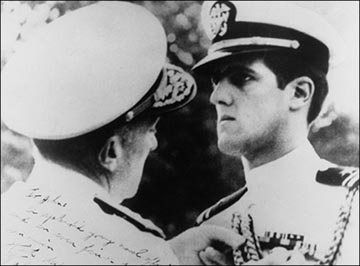 t on with our work. I was too flustered to add that Kerry is a veteran and that it is possible to support our troops without supporting the president or the reason behind the war. I wish I had known about it beforehand - my RSS feeds failed me!
Saturday, October 28, 2006
BCOO: Never Let Me Go
 Well, I finished Never Let Me Go, by Kazuo Ishiguro, yesterday. I have to say, I was pretty disappointed. I wanted another side of this story. I wanted social turmoil, discrimination, and ruthlessness. That was all there, but it remained hidden in the background until the last pages of the book.
What I got was a coming-of-age story about cloned children in a boarding school. By the end, it's revealed that the clones are created from prostitutes and homeless people. Their only purpose is to host organs to be donated to real humans (who then use these organs to cure diseases like cancer). The school where our characters reside is an 'experiment'. The teachers (or guardians, as they're called) believe that clones have souls and would benefit from actual education. We see that the clones really do have souls, because our first person narrator is one of these clones.
But do we really see 'souls'? Sure, we learn they have emotions and dreams. But our characters, at least, are also annoying, childish, and unlikeable. Their grasp of abstract concepts seems very weak. Love in particular seems to elude them, even though they develop relationships and have sex.
So the big question that finally comes around at the end is: is it cruel to raise these clones only to kill them in the end? Do we have the right to control their lives just because we created them?
Great questions. But they are questions that only come with the knowledge we receive at the end of the book. Our interest is (supposed to be) with the main characters of the book: clones who were priviliged and had almost no knowledge of the way they were viewed by the outside world.
In short, Battlestar does it much better. Though the implications and consequences are different, th ey ask the questions and keep you asking. I found the book boring and sophomoric. All the more so, because there is a great story BEHIND everything that happens in the book. I understand Ishiguro did that for a reason. But it's just not the kind of book I want to read.
Next up: Survivor, by Chuck Palahniuk. A hijacker is alone in the air on the airplane he hijacked, speaking into the black box, telling his story. It's my first Palahniuk book, and I already love it.
Friday, October 27, 2006
Bonne et heureuse semaine
DISCLAIMER:
If anyone has an *irrational* problem reading about the curse/my old Aunt Flo/the time when a woman's body flushes itself out, feel free to skip this entry. (I'll be peppering the rest of the entry with other absurd euphemisms. Yes, they're all real - except for that last one. I made that up.) However, the main point of this post is feminine PRODUCTS, so don't run screaming yet.
I wear tampons during the day when I'm rebooting the ovarian operating system. Though I have a serious problem with the fact that I'm sticking a bleached product into myself for hours at a time, it's the best solution I can find. But at night, I use pads. I don't want the tampon in there for more than four hours and on a good day, I sleep longer than that. Who am I kidding I ALWAYS sleep longer than that.
Anyway, a couple o f nights ago I opened a new package of the Always pads I use - the ones with wings on the sides. The wings are held together with a piece of paper, which you take off when you open it. That paper greets me with, "HAVE A HAPPY PERIOD!!!" It is then followed by the mandatory French translation I used as the title of this post.
(Tangent: why do most women's products have a French translation? Shampoo, make-up, tampons, pads - everything written on these products is written in both English and French. Is it only to appear posh and 'international'? If anyone knows a better reason, please enlighten me. Granted, sometimes there is a Spanish translation too, but many people in the US speak Spanish.)
This new little addition to my night-time routine gave me pause. I think I may have actually chortled. First of all, no one has a happy T-Minus 9 months and holding. Though I have been blessed with little pain and suffering during arts and crafts week at panty camp. No one has a 'happy', pleasant, or nice dishonorable discharge from the uterine navy. NO ONE. Not even the freest spirit, the hairiest, smelliest woman, the Wicca-est priestess. No one enjoys their time ordering l'omelette rouge.
The companies that make feminine products are seedy and manipulative and I'm one of their victims. I know this, yet continue to buy their products. Someone told me yesterday (we both doubted its veracity) that Tampax is being investigated for adding an addictive ingredient to their tampons. Regardless of the truth of that rumor, Tampax does conveniently forget to add bleach to their list of ingredients.
The point is, I don't want them wishing me 'a happy period'. It doesn't make me think (as I imagine their trying to) that I'm at a slumber party with a couple of my closest girlfriends. Right after our pillow fight, we start talking about how stupid it is that we complain about playing the banjo in Sgt. Zygote's Ragtime Band so much. Let's empower ourselves! Let's have HAPPY massacres at the Y! We should always be happy, right? Guys don't like it when we complain. Who cares that our insides are trying to punch through our stomach while simultaneously clenching and spinning? Who cares that we have headaches and backaches? Who cares that we have blood flowing continuously out of ourselves? Guys have to walk around with penises dangling around ALL THE TIME. We should feel sorry for them and their fragile ball sacs.
Okay. Sorry. The inner militant feminist does break out sometimes, doesn't she? The point is, saddling Old Rusty is not fun. Taking Carrie to the prom is not empowering. They're disgusting. There are times that you feel like a little child/old woman who can't control what is released down there. Ah - there's the worst part. You are not in control. For a week out of every month. A woman cannot control or predict (much) what her body will do or feel like. She feels helpless at times and ridiculous at others.
So let us be miserable. I'm not saying we should complain about them or use them as an excuse to be lazy or unproductive. But don't wish us "happy periods." It's offensive and presumptuous. Let us deal with it the way we've learned to, whether it's with chocolate or exercise. Please, just wish me a young menopause.
And let's stop with the euphemisms. A period is a period. Period. Miss Scarlet is not coming home to Tara. It is not game day at the crimson tide. I am not trolling for vampires. I am on my period. And I can feel blah. I can feel vaguely out of sorts. I don't have to take it out on anyone, but I don't have to put on a smiling face for anyone either.
Thank you, and let's keep those panty shields up, captain.
Friday, October 20, 2006
BCOO: A Dirty Job
I know - the acronym doesn't work very well. But I was annoying myself by my repetition of the 'too cute' Book Club of One. BCOO - talk about too cute. But here it is. And I'm sticking with it. For now, anyway.
So this pa rticular BCOO is about A Dirty Job, by Christopher Moore. For any of you planning to read the book, while I don't think I give too much away, I do give a brief summary with no actual details as to how things end up. Just a little warning.
I discovered Moore when I was visiting Jason in New Hampshire. The first book I read of his was Lamb: The Gospel According to Biff, Christ's Childhood Pal, which is still my favorite. Lately I've been enjoying him less, which is perplexing.
A Dirty Job is about a man who, shortly after his wife's death, discovers that he is what the book comes to refer to as a Death Merchant. Basically, Charlie can see red glowing auras around certain objects: necklaces, CDs, umbrellas, a fur coat, etc. These are 'soul vessels' which Charlie must obtain after a person has died. Charlie then puts the item up for sale in his shop and the vessels transfer to a new person who does not yet have a soul.
That's the jist. There's a lot more actual plot, but that's the premise. If Charlie (and the other Death Merchants) do not obtain the soul vessel, bad things happen.
I enjoyed the book, but I found a lot of holes in the plot and characters. I don't know if I've changed or Moore's writing has. (Jason says it's me.) Moore's novels are comic and fun, and I love that. But sometimes the comedy seems forced. It seems to take away from the novel. Some of the characters, for example, will come out with something extremely funny. Yet it feels out of place for that particular character or for that particular time. I guess my main beef is that it takes me out of the reality of the story and puts me at a distance. I can hear the author there. And I don't want to. That's it: it doesn't seem realistic at those moments.
Mind you, this is a book with fantastical elements. Hell, what am I dancing around? It's a book that belongs firmly in the fantasy genre. But the reason I love Harry Potter (the only other pure fantasy novel I've read) is because it all seems so real. I love that. I don't want to be reminded that I'm reading a novel.
While I'm looking for a quote to back myself up, however, I keep finding some great lines:
"It's okay, Ray. But I really have to go. You know, fighting the Forces of Darkness and all." Charlie held his cane out as if it were a sword and he was charging into action, which, bizarrely, it was and he was.Well, there you go. Not a glowing recommendation, but a fun, effortless read nonetheless. That's definitely not a negative. I like fun reads. If you have some spare time and want some
Everyone is happier if they have someone to look down on, as well as someone to look up to, especially if they resent both. This is not only the Beta Male strategy for survival, but the basis for capitalism, democracy, and most religions.
 laughs and some not-so-hidden pathos, have at it. But make sure you read Lamb as well.
Next up: a Japanese novelist's take on cloning, Never Let Me Go, by Kazuo Ishiguro.
Thursday, October 12, 2006
Book Club of One: The Things They Carried

I know, it's fast. But I told you I was well into it.
This book is amazing (the link takes you to a great article on Wikipedia about the book). I'm not sure exactly how to put it into words. It's one of those few books in which every word, every sentence is completely and utterly true (hence the 'faction') I mentioned in the earlier post. The book is a series of vignettes about and hovering around Tim O'Brien's experience in the Vietnam War. The details of his conflicting ideas and emotions, the people around him, the insanity, the environment, the desperation are delivered in such a way as to make you rub your face, thinking there's a foreign Vietnamese insect on your face. This book is passionate, honest, revealing, and naked. It's beautiful, horrifying, and crazy. It's all the other adjectives you can think of. It's a true work of art.
Here are some quotes derived from the many dog-eared pages:
They used a hard vocabulary to contain the terrible softness...It wasn't cruelty, just stage presence. When someone died, it wasn't quite dying, because in a curious way it seemed scripted, and because they had their lines mostly memorized, irony mixed with tragedy, and because they called it by other names, as if to encyst and destroy the reality of death itself.
They were too frig htened to be cowards.
It was my view then, and still is, that you don't make war without knowing why.
You can tell a true war story if it embarrasses you. If you don't care for obscenity, you don't care for the truth; if you don't care for the truth, watch how you vote. Send guys to war, they come home talking dirty.
And on returning after the war:The town seemed remote somehow. Sally was married and Max was drowned and his father was at home watching baseball on national TV....Norman Bowker shrugged. "No problem," he murmured.
One last quote:
I want you to feel what I felt. I want you to know why story-truth is truer sometimes than happening-truth.
I know, I went a little overboard with the quotes. But I adored this book and I hope I'll get at least one person excited about reading it.
Wednesday, October 11, 2006
Why Bush Can't Say "Nuclear"
Okay, I don't really know why. I have some theories: he's an idiot, he's from Texas, he's an idiot...I'm not sure. I just thought it would be a funny title.
This week, a great podcast from NPR, Justice Talking, focuses on nuclear disarmament and non-proliferation. It is fascinating and worth a listen to. I had forgotten much of what was addressed in the discussion.
We all know that there are many countries with nuclear bombs. The majority are left over from the Cold War, but some, like India, Pakistan, and (even though they won't admit it) Israel have armed themselves after the Nuclear Non-Proliferation Treaty was signed. (The treaty prevents the spread of nuclear weapons.) North Korea did sign the treaty but has since withdrawn.
Jason and I have had many great discussions about America's hypocrisy in condemning nuclear testing and the building of bombs. Though the treaty did not stipulate disarmament, there was a provision for a later treaty detailing disarmament policies.
We still have bombs (5,735 active warheads), China has bombs, Russia has bombs. It's a 'club'. (Also including the UK, France, and now North Korea.) So how can we blame other nations for building and testing nuclear bombs? They want to have the capability to blow us off of the face of the earth because we have the capability. I understand it.
According to the podcast, we still have bombs pointed at Russia that would be ready to go within 15 minutes of the President's decision (his go ahead is the only approval needed). What the hell!? Russia isn't even an enemy anymore.
The truth is, nuclear bombs don't do anyone any good. This isn't idealistic Amanda talking here. She's pretty much gone these days. I mean, who are we going to bomb? If we bomb any country with a nuclear bomb, we are assured an immediate retaliation. It would be suicide. If we bomb a country without a nuclear bomb, we're unjustified, cruel executioners. Defense? Doesn't sound like a g ood defense strategy to me.
So maybe Bush isn't an idiot. Maybe he says "nucular" because he thinks its folksy. He wants to show the lighter side of destruction and violence. If he says "nucular," we'll pay more attention to his idiocy than to the fact that we still have nuclear bombs set on a hair-trigger.
Of course, when he decided we should go to war in order to stop supposed nuclear armament, the ingenious Karl Rove and his minions decided they should go with the pseudonym "weapons of mass destruction." The word (or words) used for THE supposed reason for war cannot be a word that causes derision. They're brilliant, I tell you!
Monday, October 09, 2006
Book Club: A Widow for One Year
I finished this book awhile ago, and am well into my next *amazing* book,The Things They Carried, by Tim O'Brien. O'Brien is a Vietnam War veteran who has written several books about the war and several books on other subjects. This one is the former. As one of the reviewers says, this is a book of 'faction'. Though it claims to be entirely fiction (supported by one of the essays/stories in the book in which O'Brien dissects a true war story). However, the book is dedicated "the men of Alpha Company, and in particular..." and he lists the names of men who are "characters" in the book. O'Brien uses himself as well. So though this is a work of fiction, it is probably the most personal, honest work of fiction I've ever seen. I'm about half-way through and I'm in love.
But this is suppos ed to be a discussion of A Widow for One Year, by John Irving. The book is divided into three parts: Summer 1958, Fall 1990, and Fall 1995. It follows a family of writer's, The Coles and the people who surround them. Irving calls this novel "a love story" in his dedication at the beginning of the book. The story involves all kinds of love: friendship, family, sex, dating, and the prospect of finding a mate for life. But the book deals mostly (in its best parts, in my opinion) with love lost, misguided love, misrepresented love, and doomed love. The first part does this best, in my opinion. And it was the only part of the book that kept me involved in the way I expected after reading The World According to Garp.
Don't get me wrong. I still love John Irving. He can build a character in one word and many of his sentences are pregnant pause-worthy. I always know I'm going to disappear into an Irving novel. But some of the relationships in this novel just didn't ring true (I'm thinking especially of Ruth Cole and her best friend, Hannah). And I didn't buy Ruth Cole herself a lot of the time. It's not that Irving has trouble writing women: his skill with Marion in the first part is evidence to the contrary. But Ruth has a few holes and some inconsistencies (again, my opinion).
The first part, also, has the strongest images in the novel. The pictures, the hooks, the drawings, the children's books, the setting. It all really came together for me in the first part. This is the part that the movie: "The Door in the Floor" is based on.
Part of my problem with the second and third parts is that I was reading about writers who I would never read. Ruth Cole is supposedly a very famous writer, but the excerpts from her novels struck me as sophomoric and repetitive. Okay, I get the point - look at John Grisham, right? But I was bored and impatient when I had to sit there and read the fictional authors' work. Unlike in The World...Garp, where I could see the growth and beauty in Garp through his work, the work of the authors in the novel only made me think less of him. Except, of course, for Ted Cole, Ruth's father who writes children's books in the first part.
So there's a quicky little review. I will read Irving again. I'd like to try all of his books. He interests me, even though I know he's popular. I love his characters, and characters are what excite me when I read.