I don't know if anyone likes reading these things, but it's good for me to get this stuff down.
A Prayer for Owen Meany, by John Irving, is narrated by an American Literature teacher living in Canada. He tells us the story of Owen Meany, who is "the reason he believes in God." Meany is an unusually short person with a high pitched voice (it never changes, even as he matures). Irving writes all of Meany's dialogue in all-caps, to try to convey the range and volume of the voice. The capital letters come into the story, creating a definite reason for them, but the dialogue still gets annoying.
Meany is a Christ-figure, in the most blatant terms. We find out that his mother was a virgin when she became pregnant with him, that he can see into the future and accepts his fate, etc. He is not perfect - he hates Catholics and is extremely opinionated and a little crass.
The narrator, John Wheelwright, is a "Joseph," according to the character himself. He sits on the sidelines and watches Owen Meany try to change the world. And though Wheelwright tells us Owen Meany changed him, I never really saw it happen. Our narrator, therefore, never becomes an active participant in his own life. This makes him an uninteresting character, and is one of the major flaws in this book.
This book was really hard for me to get through. It was condescending and watery. By watery, I mean there was no wit, no humor, no meat. The plot was based on an assumed belief in god and miracles. Now, I love magical realism, but this wasn't magical at all. And it certainly wasn't realistic, even in the world in the book.
The book was published in 1989, and the Cold War is inserted into this book awkwardly. It permeates the novel, Irving shoving his politics into the book like he was stuffing a turkey. The goo remains on my fingers still.
Not only does Irving make the Christ figure blatantly obvious (and there is never doubt in the reader's mind that Irving means him to actually be Christ or some faction thereof), he creates metaphors and drives them through the story with a screwdriver. His similes are forced:
"These men looked like granite itself [great, I thought] - its great strength can withstand a pressure of twenty thousand pounds per square inch. Granite, like lava, was once melted rock; but it did not rise to the earth's surface - it hardened deep underground; and because it hardened slowly, it formed fairly large crystals."
Yikes! We didn't need all that. If we did, Irving could have explained this at the beginning of the novel, instead of 60 pages before the end.
I'll stop, before I get mad. I've started reading My Antonia (with the accent on the first syllable), by Willa Cather. Written in 1917-1918, My Antonia is a loving look at the immigrant experience and so far, I'm enjoying it. Though I'm going to go crazy if I don't read something with cynicism and wit soon.
Saturday, December 09, 2006
BCOO: A Prayer for Owen Meany


Sunday, December 03, 2006
Italy Says No to Skinny
 According to Guardian Unlimited's Barbara McMahon, Italy has banned uber-skinny models from their runways in February. I've seen this headline floating around for awhile.

 This is why, as per the discussion J and I had, I don't feel upset or embarrassed when people make fun of someone like Mary-Kate Olsen or Nicole Ritchie. Both women have eating disorders and both are ridiculed frequently. They both have experience in the public arena, both know how entertainment news works, and both know

 that people are constantly looking at them. Most likely because of this (and the stresses surrounding a public life), the girls eat less and less until finally they are on a watermelon or celery diet. The public notices. Obviously. But in 2006, I am finally hearing people talk about them and their bodies negatively. This gives me hope for the public and, maybe, will force these girls to get help.
Tuesday, November 21, 2006
Studio XY
I realize I've been MIA for awhile, and there's a lot of really interesting/horrible things going on in the news right now (from Bush's appointment of anti-sex education, anti-birth control Dr. Eric Keroak to oversee the nation's family planning programs, to a US soldier confessing to the gang rape and murder of a 14 year-old Iraqi girl). The Nicaraguan president has banned all abortions in the country, Robert Altman died, Murtha lost the majority leader position, and Trent Lott made a 'comeback' as minority Whip.
So what am I going to talk about? So much has gone on and I'm going to talk about...TV. Something's bothering me about Studio 60 on the Sunset Strip. The dialogue is wonderful - Aaron Sorkin is a genius when it comes to snappy, fast paced dialogue and realistic conversations. I know some people have complained the show is too preachy, others that the show-within-the-show isn't funny enough. I have slid to both sides of both of these arguments. But my problem after seeing Monday night's show? The show is too sexist.
I'm not ready to give up yet. But this was on my mind. I still think the show is smart, but I'm a little disenchanted.

In still other news, I had a student tell me that he heard someone on the radio today saying, "I'm the decider!" He thought it was funny because it sounded like apple cider. Odd.
Friday, November 10, 2006
Fighting Machismo with Skirts and Ribbons
 Okay, this is interesting. According to Guardian Unlimited, "a Spanish town council is to fight machismo on the streets by decreeing that half of all road signs and traffic signals show silhouettes with feminine attributes, such as a skirt, ribbon and ponytail, instead of just the striding man."
This is ridiculous. Fighting machismo? This is like mandating the the stick figure in Hangman have a pretty pink bow and high heels. The walking man is androgynous and anonymous. To the right is an actual Spanish walk sign. How do we know that it's not a woman? She could just be flat-chested and a little bulky. I think the ponytail and skirt are more offensive than the innocuous 'striding man'.
 I do have to include, however, some good things going on in Spain. According to the same article:
"On taking office, the Socialist prime minister, José Luis Rodriguez Zapatero,made sure half his cabinet was female and the Socialists pushed through a law last spring giving preferential treatment to firms appointing women to their boards. Last year, the government added a clause to civil marriage contracts that required men and women to share the housework and childcare."
Though it's sad that this level of equality has to be put into a legally binding contract, the US could probably benefit from that kind of attention and care. Obviously, though, that kind of thing can go too far, as is evidenced by the ponytail lady.
Also interesting was the obvious bias in this article. The walking men were described as
boxy male figures" and "those smug little crossing men." Smug? I have never been waiting to walk and tho ught, "Gee, the profile of that walking man has something haughty about him. He looks a little too pleased with himself. Look at the way his legs stretch like that. And all those lights around his outline? Who does he think he is? Where's my walking girl in a skirt and ponytail? That would be much less offensive."
Wednesday, November 08, 2006
BCOO: Survivor
 Nope, not the TV show. Though this book by Chuck Palahniuk did satirize this nation's (most industrialized nations') ridiculous propensity for glamorizing and idolizing random people.
The book was fun, rough, gritty, ridiculous, and interesting. I laughed and cringed my through it. I had a great time and can't wait to read more Palahniuk stuff (he lives in Portland, incidentally).
The book is structured backwards, though in number and premise only. Tender tells the story to a black box, alone on a plane that he's riding till it runs out gas and crashes. In that sense, and in the sense that we begin the book on chapter 47, page 289, the book is backwards. I'm not sure, but it feels a little gimmicky. I think it's the only think I didn't completely love about the book.
And now for my favorite part: quotes. Keep in mind that Palahniuk is sardonic and irreverent. I love it.
(Tender's brother telling him about 'the outside world' just before he leaves the cult compound): People used what they called a telephone because they hated being close together and they were too scared of being alone.
The girl last night, the only other remaining survivor of the Creedish church district, she ate dirt. There's even a name for it. They call it geophagy. This was popular among the Africans brought to America as slaves. Popular probably isn't the right word.
The same way every generation reinvents Christ, the agent's giving me the same makeover. The agent says nobody is going to worship anybody with my roll of flab around his middle. These days, people aren't going to fill stadiums to get preached at by somebody who isn't beautiful.
According to the journalist watching the director watch the agent watch me watch the TelePrompTer, according to her I'm very happy and fulfilled now that I'm free of the Creedish Death Cult.
Monday, November 06, 2006
Kerry the Klown
Okay. Kerry can't tell a joke, won't apologize for the misunderstanding, and Republicans rejoice and cheer.

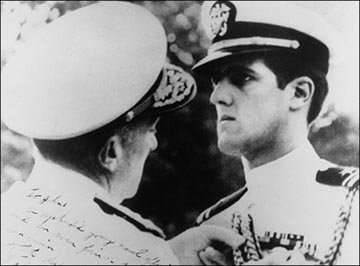 t on with our work. I was too flustered to add that Kerry is a veteran and that it is possible to support our troops without supporting the president or the reason behind the war. I wish I had known about it beforehand - my RSS feeds failed me!
Saturday, October 28, 2006
BCOO: Never Let Me Go
 Well, I finished Never Let Me Go, by Kazuo Ishiguro, yesterday. I have to say, I was pretty disappointed. I wanted another side of this story. I wanted social turmoil, discrimination, and ruthlessness. That was all there, but it remained hidden in the background until the last pages of the book.
What I got was a coming-of-age story about cloned children in a boarding school. By the end, it's revealed that the clones are created from prostitutes and homeless people. Their only purpose is to host organs to be donated to real humans (who then use these organs to cure diseases like cancer). The school where our characters reside is an 'experiment'. The teachers (or guardians, as they're called) believe that clones have souls and would benefit from actual education. We see that the clones really do have souls, because our first person narrator is one of these clones.
But do we really see 'souls'? Sure, we learn they have emotions and dreams. But our characters, at least, are also annoying, childish, and unlikeable. Their grasp of abstract concepts seems very weak. Love in particular seems to elude them, even though they develop relationships and have sex.
So the big question that finally comes around at the end is: is it cruel to raise these clones only to kill them in the end? Do we have the right to control their lives just because we created them?
Great questions. But they are questions that only come with the knowledge we receive at the end of the book. Our interest is (supposed to be) with the main characters of the book: clones who were priviliged and had almost no knowledge of the way they were viewed by the outside world.
In short, Battlestar does it much better. Though the implications and consequences are different, th ey ask the questions and keep you asking. I found the book boring and sophomoric. All the more so, because there is a great story BEHIND everything that happens in the book. I understand Ishiguro did that for a reason. But it's just not the kind of book I want to read.
Next up: Survivor, by Chuck Palahniuk. A hijacker is alone in the air on the airplane he hijacked, speaking into the black box, telling his story. It's my first Palahniuk book, and I already love it.
Friday, October 27, 2006
Bonne et heureuse semaine
DISCLAIMER:
If anyone has an *irrational* problem reading about the curse/my old Aunt Flo/the time when a woman's body flushes itself out, feel free to skip this entry. (I'll be peppering the rest of the entry with other absurd euphemisms. Yes, they're all real - except for that last one. I made that up.) However, the main point of this post is feminine PRODUCTS, so don't run screaming yet.
I wear tampons during the day when I'm rebooting the ovarian operating system. Though I have a serious problem with the fact that I'm sticking a bleached product into myself for hours at a time, it's the best solution I can find. But at night, I use pads. I don't want the tampon in there for more than four hours and on a good day, I sleep longer than that. Who am I kidding I ALWAYS sleep longer than that.
Anyway, a couple o f nights ago I opened a new package of the Always pads I use - the ones with wings on the sides. The wings are held together with a piece of paper, which you take off when you open it. That paper greets me with, "HAVE A HAPPY PERIOD!!!" It is then followed by the mandatory French translation I used as the title of this post.
(Tangent: why do most women's products have a French translation? Shampoo, make-up, tampons, pads - everything written on these products is written in both English and French. Is it only to appear posh and 'international'? If anyone knows a better reason, please enlighten me. Granted, sometimes there is a Spanish translation too, but many people in the US speak Spanish.)
This new little addition to my night-time routine gave me pause. I think I may have actually chortled. First of all, no one has a happy T-Minus 9 months and holding. Though I have been blessed with little pain and suffering during arts and crafts week at panty camp. No one has a 'happy', pleasant, or nice dishonorable discharge from the uterine navy. NO ONE. Not even the freest spirit, the hairiest, smelliest woman, the Wicca-est priestess. No one enjoys their time ordering l'omelette rouge.
The companies that make feminine products are seedy and manipulative and I'm one of their victims. I know this, yet continue to buy their products. Someone told me yesterday (we both doubted its veracity) that Tampax is being investigated for adding an addictive ingredient to their tampons. Regardless of the truth of that rumor, Tampax does conveniently forget to add bleach to their list of ingredients.
The point is, I don't want them wishing me 'a happy period'. It doesn't make me think (as I imagine their trying to) that I'm at a slumber party with a couple of my closest girlfriends. Right after our pillow fight, we start talking about how stupid it is that we complain about playing the banjo in Sgt. Zygote's Ragtime Band so much. Let's empower ourselves! Let's have HAPPY massacres at the Y! We should always be happy, right? Guys don't like it when we complain. Who cares that our insides are trying to punch through our stomach while simultaneously clenching and spinning? Who cares that we have headaches and backaches? Who cares that we have blood flowing continuously out of ourselves? Guys have to walk around with penises dangling around ALL THE TIME. We should feel sorry for them and their fragile ball sacs.
Okay. Sorry. The inner militant feminist does break out sometimes, doesn't she? The point is, saddling Old Rusty is not fun. Taking Carrie to the prom is not empowering. They're disgusting. There are times that you feel like a little child/old woman who can't control what is released down there. Ah - there's the worst part. You are not in control. For a week out of every month. A woman cannot control or predict (much) what her body will do or feel like. She feels helpless at times and ridiculous at others.
So let us be miserable. I'm not saying we should complain about them or use them as an excuse to be lazy or unproductive. But don't wish us "happy periods." It's offensive and presumptuous. Let us deal with it the way we've learned to, whether it's with chocolate or exercise. Please, just wish me a young menopause.
And let's stop with the euphemisms. A period is a period. Period. Miss Scarlet is not coming home to Tara. It is not game day at the crimson tide. I am not trolling for vampires. I am on my period. And I can feel blah. I can feel vaguely out of sorts. I don't have to take it out on anyone, but I don't have to put on a smiling face for anyone either.
Thank you, and let's keep those panty shields up, captain.
Friday, October 20, 2006
BCOO: A Dirty Job
I know - the acronym doesn't work very well. But I was annoying myself by my repetition of the 'too cute' Book Club of One. BCOO - talk about too cute. But here it is. And I'm sticking with it. For now, anyway.
So this pa rticular BCOO is about A Dirty Job, by Christopher Moore. For any of you planning to read the book, while I don't think I give too much away, I do give a brief summary with no actual details as to how things end up. Just a little warning.
I discovered Moore when I was visiting Jason in New Hampshire. The first book I read of his was Lamb: The Gospel According to Biff, Christ's Childhood Pal, which is still my favorite. Lately I've been enjoying him less, which is perplexing.
A Dirty Job is about a man who, shortly after his wife's death, discovers that he is what the book comes to refer to as a Death Merchant. Basically, Charlie can see red glowing auras around certain objects: necklaces, CDs, umbrellas, a fur coat, etc. These are 'soul vessels' which Charlie must obtain after a person has died. Charlie then puts the item up for sale in his shop and the vessels transfer to a new person who does not yet have a soul.
That's the jist. There's a lot more actual plot, but that's the premise. If Charlie (and the other Death Merchants) do not obtain the soul vessel, bad things happen.
I enjoyed the book, but I found a lot of holes in the plot and characters. I don't know if I've changed or Moore's writing has. (Jason says it's me.) Moore's novels are comic and fun, and I love that. But sometimes the comedy seems forced. It seems to take away from the novel. Some of the characters, for example, will come out with something extremely funny. Yet it feels out of place for that particular character or for that particular time. I guess my main beef is that it takes me out of the reality of the story and puts me at a distance. I can hear the author there. And I don't want to. That's it: it doesn't seem realistic at those moments.
Mind you, this is a book with fantastical elements. Hell, what am I dancing around? It's a book that belongs firmly in the fantasy genre. But the reason I love Harry Potter (the only other pure fantasy novel I've read) is because it all seems so real. I love that. I don't want to be reminded that I'm reading a novel.
While I'm looking for a quote to back myself up, however, I keep finding some great lines:
"It's okay, Ray. But I really have to go. You know, fighting the Forces of Darkness and all." Charlie held his cane out as if it were a sword and he was charging into action, which, bizarrely, it was and he was.Well, there you go. Not a glowing recommendation, but a fun, effortless read nonetheless. That's definitely not a negative. I like fun reads. If you have some spare time and want some
Everyone is happier if they have someone to look down on, as well as someone to look up to, especially if they resent both. This is not only the Beta Male strategy for survival, but the basis for capitalism, democracy, and most religions.
 laughs and some not-so-hidden pathos, have at it. But make sure you read Lamb as well.
Next up: a Japanese novelist's take on cloning, Never Let Me Go, by Kazuo Ishiguro.
Thursday, October 12, 2006
Book Club of One: The Things They Carried

I know, it's fast. But I told you I was well into it.
This book is amazing (the link takes you to a great article on Wikipedia about the book). I'm not sure exactly how to put it into words. It's one of those few books in which every word, every sentence is completely and utterly true (hence the 'faction') I mentioned in the earlier post. The book is a series of vignettes about and hovering around Tim O'Brien's experience in the Vietnam War. The details of his conflicting ideas and emotions, the people around him, the insanity, the environment, the desperation are delivered in such a way as to make you rub your face, thinking there's a foreign Vietnamese insect on your face. This book is passionate, honest, revealing, and naked. It's beautiful, horrifying, and crazy. It's all the other adjectives you can think of. It's a true work of art.
Here are some quotes derived from the many dog-eared pages:
They used a hard vocabulary to contain the terrible softness...It wasn't cruelty, just stage presence. When someone died, it wasn't quite dying, because in a curious way it seemed scripted, and because they had their lines mostly memorized, irony mixed with tragedy, and because they called it by other names, as if to encyst and destroy the reality of death itself.
They were too frig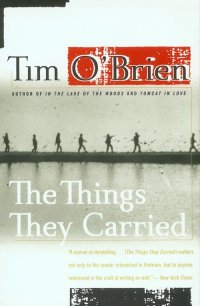 htened to be cowards.
It was my view then, and still is, that you don't make war without knowing why.
You can tell a true war story if it embarrasses you. If you don't care for obscenity, you don't care for the truth; if you don't care for the truth, watch how you vote. Send guys to war, they come home talking dirty.
And on returning after the war:The town seemed remote somehow. Sally was married and Max was drowned and his father was at home watching baseball on national TV....Norman Bowker shrugged. "No problem," he murmured.
One last quote:
I want you to feel what I felt. I want you to know why story-truth is truer sometimes than happening-truth.
I know, I went a little overboard with the quotes. But I adored this book and I hope I'll get at least one person excited about reading it.
Wednesday, October 11, 2006
Why Bush Can't Say "Nuclear"
Okay, I don't really know why. I have some theories: he's an idiot, he's from Texas, he's an idiot...I'm not sure. I just thought it would be a funny title.
This week, a great podcast from NPR, Justice Talking, focuses on nuclear disarmament and non-proliferation. It is fascinating and worth a listen to. I had forgotten much of what was addressed in the discussion.
We all know that there are many countries with nuclear bombs. The majority are left over from the Cold War, but some, like India, Pakistan, and (even though they won't admit it) Israel have armed themselves after the Nuclear Non-Proliferation Treaty was signed. (The treaty prevents the spread of nuclear weapons.) North Korea did sign the treaty but has since withdrawn.
Jason and I have had many great discussions about America's hypocrisy in condemning nuclear testing and the building of bombs. Though the treaty did not stipulate disarmament, there was a provision for a later treaty detailing disarmament policies.
We still have bombs (5,735 active warheads), China has bombs, Russia has bombs. It's a 'club'. (Also including the UK, France, and now North Korea.) So how can we blame other nations for building and testing nuclear bombs? They want to have the capability to blow us off of the face of the earth because we have the capability. I understand it.
According to the podcast, we still have bombs pointed at Russia that would be ready to go within 15 minutes of the President's decision (his go ahead is the only approval needed). What the hell!? Russia isn't even an enemy anymore.
The truth is, nuclear bombs don't do anyone any good. This isn't idealistic Amanda talking here. She's pretty much gone these days. I mean, who are we going to bomb? If we bomb any country with a nuclear bomb, we are assured an immediate retaliation. It would be suicide. If we bomb a country without a nuclear bomb, we're unjustified, cruel executioners. Defense? Doesn't sound like a g ood defense strategy to me.
So maybe Bush isn't an idiot. Maybe he says "nucular" because he thinks its folksy. He wants to show the lighter side of destruction and violence. If he says "nucular," we'll pay more attention to his idiocy than to the fact that we still have nuclear bombs set on a hair-trigger.
Of course, when he decided we should go to war in order to stop supposed nuclear armament, the ingenious Karl Rove and his minions decided they should go with the pseudonym "weapons of mass destruction." The word (or words) used for THE supposed reason for war cannot be a word that causes derision. They're brilliant, I tell you!
Monday, October 09, 2006
Book Club: A Widow for One Year
I finished this book awhile ago, and am well into my next *amazing* book,The Things They Carried, by Tim O'Brien. O'Brien is a Vietnam War veteran who has written several books about the war and several books on other subjects. This one is the former. As one of the reviewers says, this is a book of 'faction'. Though it claims to be entirely fiction (supported by one of the essays/stories in the book in which O'Brien dissects a true war story). However, the book is dedicated "the men of Alpha Company, and in particular..." and he lists the names of men who are "characters" in the book. O'Brien uses himself as well. So though this is a work of fiction, it is probably the most personal, honest work of fiction I've ever seen. I'm about half-way through and I'm in love.
But this is suppos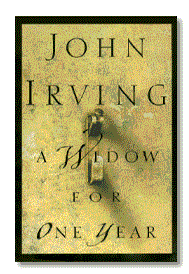 ed to be a discussion of A Widow for One Year, by John Irving. The book is divided into three parts: Summer 1958, Fall 1990, and Fall 1995. It follows a family of writer's, The Coles and the people who surround them. Irving calls this novel "a love story" in his dedication at the beginning of the book. The story involves all kinds of love: friendship, family, sex, dating, and the prospect of finding a mate for life. But the book deals mostly (in its best parts, in my opinion) with love lost, misguided love, misrepresented love, and doomed love. The first part does this best, in my opinion. And it was the only part of the book that kept me involved in the way I expected after reading The World According to Garp.
Don't get me wrong. I still love John Irving. He can build a character in one word and many of his sentences are pregnant pause-worthy. I always know I'm going to disappear into an Irving novel. But some of the relationships in this novel just didn't ring true (I'm thinking especially of Ruth Cole and her best friend, Hannah). And I didn't buy Ruth Cole herself a lot of the time. It's not that Irving has trouble writing women: his skill with Marion in the first part is evidence to the contrary. But Ruth has a few holes and some inconsistencies (again, my opinion).
The first part, also, has the strongest images in the novel. The pictures, the hooks, the drawings, the children's books, the setting. It all really came together for me in the first part. This is the part that the movie: "The Door in the Floor" is based on.
Part of my problem with the second and third parts is that I was reading about writers who I would never read. Ruth Cole is supposedly a very famous writer, but the excerpts from her novels struck me as sophomoric and repetitive. Okay, I get the point - look at John Grisham, right? But I was bored and impatient when I had to sit there and read the fictional authors' work. Unlike in The World...Garp, where I could see the growth and beauty in Garp through his work, the work of the authors in the novel only made me think less of him. Except, of course, for Ted Cole, Ruth's father who writes children's books in the first part.
So there's a quicky little review. I will read Irving again. I'd like to try all of his books. He interests me, even though I know he's popular. I love his characters, and characters are what excite me when I read.
Sunday, October 01, 2006
A Response to ... No One
I have a bone to pick. I picked the bone up over at Broadsheet (yep - I can't get enough of those writers over there). This article, posted on 9/27, was about a convention outside of Chicago entitled "Contraception is Not the Answer." Here's my bone:
"As the Chicago Tribune reports, 'Experts at the gathering assailed contraception on the grounds that it devalues children, harms relationships between men and women, promotes sexual promiscuity and leads to falling birth rates, among social ills.' (Who says we can't have it all?)."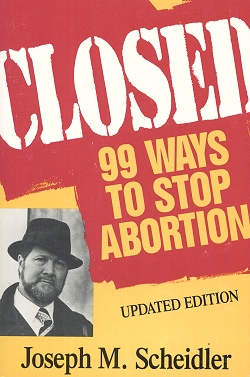
Also, "according to Joseph Scheidler, head of conference sponsor the Pro-Life Action
League: 'Contraception is more the root cause of abortion than anything
else.'"
Alright, let me hit all the points. I'll skip the big one.
Birth Control:
-devalues children; I'm assuming the argument is that, in using contraception, a woman (or man) is killing a potential life. This argument is entirely based on a set of beliefs that I don't have, namely, that all potential life is sacred, that an unborn, un-thought-of, unfertilized 'child' should come before a living, breathing, rational being. In this argument, the woman's eggs and the man's sperm cease to become private property and the person who 'owns' the eggs/sperm does not have any say in their use.
-harms relationships; I have no idea what this argument means. Does it harm relationships because there are no kids for whom the couple feels obligated to stay together? Does anyone understand?
-skipping-
-leads to falling birth rates; maybe, or falling abortion rates - a good thing on all sides. This argument is beginning to be utilized by pro-life organ izations. They are becoming pro-contraception (or, as Scheidler calls them, "contraception buffs") because they believe (accurately) that greater contraception usage will lead to less unwanted pregnancies, which will lead to a decrease in the number of abortions. And everyone (no matter what people who call us 'pro-abortion' might think) would love a decrease in abortions. It isn't pleasant for anyone to have to go through. Falling birth rates would also lead to less poverty, decreased population, and less unwanted children waiting to be adopted. Because guess what? People who use contraception DON'T WANT TO GET PREGNANT!!!
-contraception is largely the root cause of abortion; I don't think even merits discussion. What was he thinking?
Okay, back to the promiscuity argument. This is the big bone (yeah, yeah - ha ha) I've been waiting to pick at. This argument is used for contraception, Plan B, RU-486(the abortion pill), and abortion itself. These will all, according to some, lead to sexual promiscuity!!! No! Please! Think of the children!
This assumes that women are unable to control themselves, waiting for anything that will allow them to take anything they can get. Women are sexual creatures, unable to check their desires. They think: "If I won't get pregnant, that means I should have sex whenever and wherever I can! Yahoo!" And while this may be a nice fantasy for some of the men who run these 'organizations' it is not the truth.
Women come in all different types and contain all levels of intelligence, just like men. I know! It's crazy, right? Some women make bad decisions, others make impulsive decisions. Still others wait too long and never grab the chance to make a decision.
If women make a (in my opinion) bad decision to sleep with someone they don't know or don't trust, they are also capable of making the decision to have sex *without* birth control. There are many women who are scared to ask guys to use a condom. While this is RIDICULOUSLY stupid, as it puts women at risk for countless sexual diseases, wouldn't it be better if this woman, who makes bad decisions, to NOT have a child? Why don't we throw her a bone and give her a little birth control so that the next time she has unprotected sex and contracts HIV, she won't give the infection to the fertilized egg cropping up a week later. Again, let her bad decision be HERS. Wouldn't it be better if her bad decisions affected only herself?
I went on a tangent, I know. Please, ladies, use condoms AND birth control.
My point? Birth control does not change a woman's choice. A woman who is prone to bad decisions will continue to make them, and it would be better if those decisions (and the effects of them) were not passed to a child.
My main problem with this argument is the assumption mentioned above. Women cannot take care of themselves, cannot be trusted to take control of their own bodies, their own existence. So why do they want these poor, helpless, wimpy women to have babies? If we can't make decisions for ourselves, how can we raise a child?
Wednesday, September 27, 2006
Shotgun Abortions
 According to SaveRoe.com, "yesterday, by a vote of 264-153, the House passed the Child Interstate Abortion Act (CIANA), a bill that would make it a federal crime for anyone other than a young woman’s parent to help her cross state lines to get abortion services."
Though the pro-choice argument was sappy and one-sided (an aunt or grandmother can't help her poor, abused neice/granddaughter), the other side's argument struck me as ridiculous. Save Roe details one argument:
On the anti-choice side, some lawmakers made the absurd argument that if we allow minors to have abortions without parental notification in cases of rape or incest, we would "end up hiding the crimes of rape and incest."Yeah! We need some evidence in the form of a child! That'll show the rapists, fathers (in this case, we're forcing girls to notify their rapist of the abortion, in which case this whole argument falls apart), and brothers! A report on NPR included a related argument: that an abusive boyfriend or a rapist might force a woman under the age of 18 to cross state lines and get an abortion.
I'm not naive. I know that there are men out there who really would try to force their girlfriends to get an a
 bortion (I sincerely doubt there are rapists out there who would). And again, the incest part of the argument doesn't play out - a father raping his daughter would have no problem forcing abortion on her. But what pro-lifers refuse to see is that clinics are not handing out abortions like those poor people with flyers on the street. Clinics are there for the woman. They sit with a woman - alone - and counsel her to make the decision that's right for her. There would be no way to force an abortion on a woman, because a qualified counselor would see if it's not the choice she wants to make. This argument assumes that clinics place little value on a woman's opinion. Having worked at a Planned Parenthood clinic, I can say with complete conviction - this is a ridiculous assumption.
So, here we are again. One step forward (Plan B over the counter! Yay). Five leaps back. I'm scared.
Sunday, September 24, 2006
It's a Movie...No! It's a Musical!...No! It's a Movie Again!
I am pissed. Not about anything of any real consequence. I'm just pissed. Why the hell do people want to turn wonderful movies into mediocre musicals? I'm talking Beauty and the Beast, Mary Poppins, Finding Nemo, The Producers. Yes, I realize it's for the money, but these musicals are ruining my childhood memories. (Finding Nemo - not really a CHILDHOOD memory, though many people think I still look 12 years old.)
The last mov ie-to-musical I mentioned brings in a new category that I absolutely despise. It's the movie that's been changed into a musical, which is then delivered again in movie form. Possibly, I'm so irate about this matter because The Producers was one of my favorite movies. Gene Wilder is ridiculous and hysterical. Zero Mostel is dirty and over-the-top. Everything about the movie holds that Mel Brooks humor, laced with both satire and innocence.
But then, they come along and make a musical out of it. Brooks writes more songs, but he's not really a songwriter. The songs turn out to be poor imitations of Cole Porter and Jerry Herman. The script comes from the movie, which is funny. But on the stage, everything needs to be bigger, right? So the script, the acting, the general tone of the show gets amped to the nth degree. Everything is loud and "wacky"(the 'wocka-wocka' kind of wacky). Not my bag at all.
But that's not enough. They have to make MORE money off of this ridiculous enterprise. Do they worry at all about what quality may come out of a story that's been raped and pillaged?(movie!musical!movie! who am I, what am I?) Nope. Ostensibly, nobody cares. The movie is shitty as a result. Though admittedly, I haven't seen the film (I t hink I'll cry), from what I hear, the performances are to broad and campy. They've lost the heart of the first film, the humanity in the two losers who star in this ...thing. Movie? Musical? Movie-musical? Thing formerly known as good?
This is not the only instance of this, and we should expect more to come in the future. Hairspray is the next one up. Though I hold no attachment to the ORIGINAL movie, my problem is still the same. I don't want to lose these movies that were apparently so inspiring that people were moved to make a musical out of them. The next generation (yes, I'm doing it, I'm playing the child card) is going to miss some wonderful movies. Instead of the subtly subtlety (a phrase I just made up for a work that is over-the-top with quiet strains of pathos and empathy) of the original The Producers, people will see a cotton ball fluff of a movie. No one will have the context we have, of my generation and older. No one will have seen the process of bastardization that we have witnessed. They'll just see a bunch of crappy, campy movies that do not interest them. This will then begin the ultimate turn away from movies with any substance. The nation will then be over-run with violent, sex-filled gang movies (rated PG unless they are either gay gangsters or straight gangsters who show their penises).
There I go, ranting again. Oh well. I know that the 'art' of the remake is nothing new, but these things get to me. I see no other reason to remake something unless you will change it somehow for the better. Whether that improvement comes because of an update for a generation's mindset (Baz Luhrmann, I'm NOT looking at you), because of a new, updated "look" for the film that would have fit with the director's original vision, or for some other artistic, interesting reason. But these movie-musical-movies seem to be solely cash cows. There is no other purpose in making these movies except to cash in on people's bad taste in musicals.
That's it for me.
Tuesday, September 19, 2006
An Army of One...Straight...Man
The Daily Show presents me with: things that make you go...hmmm...
It was a quite absurd interview from Jason Jones that did it this time. Jones interviewed a former military officer who was serving as an Arabic translator. The 'former' is present because he was kicked out for being gay. Openly gay, that is. He told. And we are suffering.
Although I have no act ual statistics to back myself up, there seems to be a severe shortage of Arabic translators at a time when they are desperately needed (I'm obviously not the only one who believes this - click on the comic strip to the left). As Jones said (I'm paraphrasing): we'd rather be attacked by terrorists than have gays in our military.
Jones also pointed out that the military has opened their ranks to "the old, delinquent, and severely retarded," but has neglected to revise their ridiculous 'don't ask, don't tell' policy.
For the other perspective, Jones interviewed Dr. Paul Cameron, chairman of the Family Research Institute. This man was obviously chosen for his tendency to make extremely ridiculous and inflammatory remarks. However, his reasoning for dismissing gays from the military makes as much sense to me as any other.
Why else would people have a problem with gays unless they thought, like Cameron, that gay men are constantly on the prowl, distracting other men, making other men uncomfortable, all the while neglecting to get any work done. People assume that their presence will affect the environment. Cameron mentioned rape and 'intromiss'ing. Who the hell is this guy?
My point, though, is that this is all actually a realistic version of what women in the military face every day. There are many stories of male-female rape in the military. Are there ANY stories of male-male rape? If there are, I'm sure the numbers are nowhere near equal. This is the same argument people used to keep women out of the military, only swapped. STRAIGHT men were the ones constantly on the prowl, unable to control themselves. But it was women who were forced to suffer for it. If the argument stayed the same - we should keep gay men out because they harm and distract the straight-ies - then we should have no straight men in the military either.
An army of women. Interesting. But now that we only have women in the military, let's get some homosexuals in there! No one would want anything to do with the other sexually, and they can all set their minds to war and nothing but war. Mindless machines. That's what we're after, right?
I know. Now I'm getting inflammatory. I won't impose my ideas about the military without getting there through rational argument. That's for another day. Anyway, just some ideas. I'm going to go finish watching The Daily Show.
Book Club of One, Part 4 - Marquez-lite
 I finished Of Love and Other Demons a couple of days ago, but couldn't find time to write about it until now.
Can anyone tell this is my night off?
I don't have much to say about the book. It just didn't strike me as deeply as some of Marquez's other novels (namely One Hundred Years of Solitude). I felt it could have been more fleshed out. I guess I just wanted more.
Obviously, I have little to say about it. If anyone has another opinion, please let me know. Truthfully, I found Marquez' 2 page introduction on the inspiration for the novel much more riveting than the novel itself. I wanted more hair, more magic, more broken faith. Instead I get a rabid, demonic little girl and the righteous holy man who falls for her. Sounds great, right? But that's all we get. There is a lot left up to the imagination in this 150 page book.
I know. I'm sure I'm missing something. But honestly, it's hard for me to see the Marquez I've come to adore, in this novel. That isn't to say I didn't 'enjoy' the novel. I'm just a bit disappointed. This feels a lot like Marquez' latest 'novel'
Memoirs of My Melancholy Whores. Maybe it's a name thing. The books with the best titles are the least beautiful. Hmmm...
I know. I'm probably dense and ridiculous, missing the best side of this novel and all its intricacies. Enlighten me, please.
Saturday, September 16, 2006
Oh, Boy
If anyone's interested in a better, more succinct analysis of the game I discussed below, please see JWL's comment on said discussion. He is completely right.
What I forgot in my discussion was a very apropos news story. It turns out we Americans are not the only ones obsessed with the babies and baby bumps (don't even get me started on that one) of our stars. The Japanese people are shouting in triumph after Princess Kiko gave birth. (Interestingly enough, a quick internet search revealed no photos of the Japanese baby. There's a HUGE cultural d ifference for you.) Nope, this was not just any run-of-the-mill proudly painful and completely silent Scientology birth. This baby was ... a boy! The first boy, in fact, to be born into Japan's royal family in more than four decades, according to the BBC. His birth effectively puts an end to the debate about whether the law should be changed to allow a female heir to the throne. Yahoo...
But this debate did reveal a sign that the general public of Japan could...maybe...sort of...be sliding to a more moderate social structure...perhaps. The current Prime Minister, Junichiro Koizumi, was advocating the change in law. And there were signs that the general public agreed with him. That's great. So the public was CONSIDERING allowing a woman into an inconsequential, cardboard position. It would have been a small step, but a step nonetheless.
This news story simply backs up what JLW said and puts the game into more of a perspective. Japanese culture is truly hard for someone like me to understand, much less respect. Though there are small signs things are getting better out there for women, they are not nearly enough to satisfy someone like me. Again, that's ME coming from MY viewpoint referring to things through MY frame of reference. Ahhh...the plight of (as religious people call me) the relativist. (italics are to denote the fact that this word is considered dirty by many of said religious people).
Friday, September 15, 2006
Hmmm...
Alright. Here we go. Come with me now (Buffy fans, take note of my Andrew impersonation) as we follow Amanda on another journey through her brain.
I recently had a birthday. My family, being the crazy, generous people they are, bought me a PS2. I have recently been embracing my inner geekdom and needed a console to complete the process. I love it, though Jason has gotten more time on it, the bastard. Anyway, though I received some great games from my family, I have, of course, been looking at other games that are out there. Beware, my Amazon wishlist will soon be three times as large. Of course, I use it for myself - a way to remember the things that I want so that I can make smart decisions about what to buy for myself. Yep, you guys didn't need to know that.
I'm getting there, my point is near. We're rounding the curve...yeah. Here we are.
While browsing PS2 games, I came across a game calledThe Daughter Simulation: Together with Father. I'm not sure why I clicked on the title to get more information about the game, but I did. Here's what I saw:
A first-person adventure that puts the player in the role of a loving father who can raise his daughter to be 20 different kinds of women. Begin at childhood and watch her grow-up into an adult. Japan only.

It wasn't until the end of this blurb that I realized exactly what kind of game this was. It was the "Japan only" part of the blurb. This is a game that completely distorts and idealizes gender issues. I mean, what could this game possibly accomplish? What does it mean?
So yes, we have "a loving father." A loving father who chooses between "20 different kinds of women." I'd really be curious to see the choices. Are they all Japanese? Does the player see what his 'daughter' will look like when she grows up? Do they have different personality traits? What are the objects and goals of this game? I wonder if I'd be less conflicted about it if some of the goals were: get her to college, make sure she's independent and kind? What if the goals are: get her married, fed, and pregnant? If anyone out there can help me, I'd be really grateful.
I obviously don't know enough about the game to form an opinion. The blurb and the title just struck me as...odd. And potentially dangerous. I mean - The Daughter SIMULATION?
And, as I discussed with a good friend the other day (in a two minute conversation that is still obviously making me think), I have always had a little voice in my head. It tells me when I'm looking at something through my own frame of reference and judging it before I can see/hear the other viewpoint. Is this a cultural thing I just don't understand? I hope so. Someone Japanese! Help!
Is this so different from the popular American simulation game The Sims? There is a small difference - we are playing god when we're playing the sims. In The Daughter Simulation, the player is only playing dad. Is ours better because it bears so little resemblance to our own reality (none of us are, in fact, gods)? Or is the Japanese game better because it is involved in preparation for and "love" of a daughter? I think the questions and fears that come with these games warrants a different post, so I'll stop here.
I know my lack of knowledge and understanding of the game may strike some of you as annoying, and I'm sorry. But I'm really asking for help here. I want to know where I stand with this game.
Monday, September 11, 2006
Yikes! + Book Club of One, Part 3 - Crime and Punishment
Well, now we know what happens when my computer breaks down, I open a show, and feel uninspired in the course of a week or two: no posts. No writing actually. I need to fix that. Here goes, from Jason's computer.
I finished Crime and Punishment a couple days ago. I really don't think I have anything to say that hasn't been said many many times before me. It is an incredible book. I enjoyed it immensely. More than I thought I would, actually.
The book follows Raskolnikov as he plans, carries out, and meditates on a murder of two women. One victim is an old woman, "a foul, noxious louse! An old pawnbroker woman no good to anybody, who sucked the life juices of the poor . . ." in Raskolnikov's words. She is Raskolnikov's intended victim. The one he owes money too, the one he justifies killing. The second is a young woman, Lizaveta, the old woman's sister, who happens upon the murderer just after he has committed the crime. The bloody axe and the dead woman are two good indications to Lizaveta that the man standing in front of her (Raskolnikov) is the murderer. Thus, she is R's second victim.
For this second swing of the axe, Raskolnikov does feel a twinge of regret (please correct me if I'm wrong). But R never feels remorse for the old woman's death. In fact, at times he feels justified.
We spend most of the novel inside R's head, which Dostoevsky uses to great effect. First, we see the psychology of murder, the reasoning of the murderer, and the effects the murder has on the murderer. Secondly, and more importantly, we identify with him. We see how he came to the murder. We see how he got there and a chance that he could come back. The book ends with Raskolnikov in jail and the prospect of a new, possibly heroic Raskolnikov (altered by love - another main character saved by love? what is this?)
I think I'll stop there, before I turn this into a Lit paper. I've started a Gabriel Garcia Marquez novel (I think it's the only full-length novel of his that I haven't read), Of Love and Other Demons. Marquez is one of my favorite authors, and the premise promises an enjoyable, thought provoking read. It focuses on the love affair between a priest and a young girl.
Hopefully, I'll find more time now that the show is open. Though we're starting another one tomorrow. Oh well. I'll write whenever I can. Wish me luck with MY computer.